The Universal Weight Subspace Hypothesis
Properties
Even though different neural networks are trained on wildly different tasks, they might all be speaking the same geometric language? While training a model for a specific task often feels like a unique journey, new research suggests the final destination in weight space might be surprisingly similar for many models. When you analyze the weight matrices of models trained on diverse tasks, they don’t scatter randomly but instead converge to remarkably similar low-dimensional subspaces.
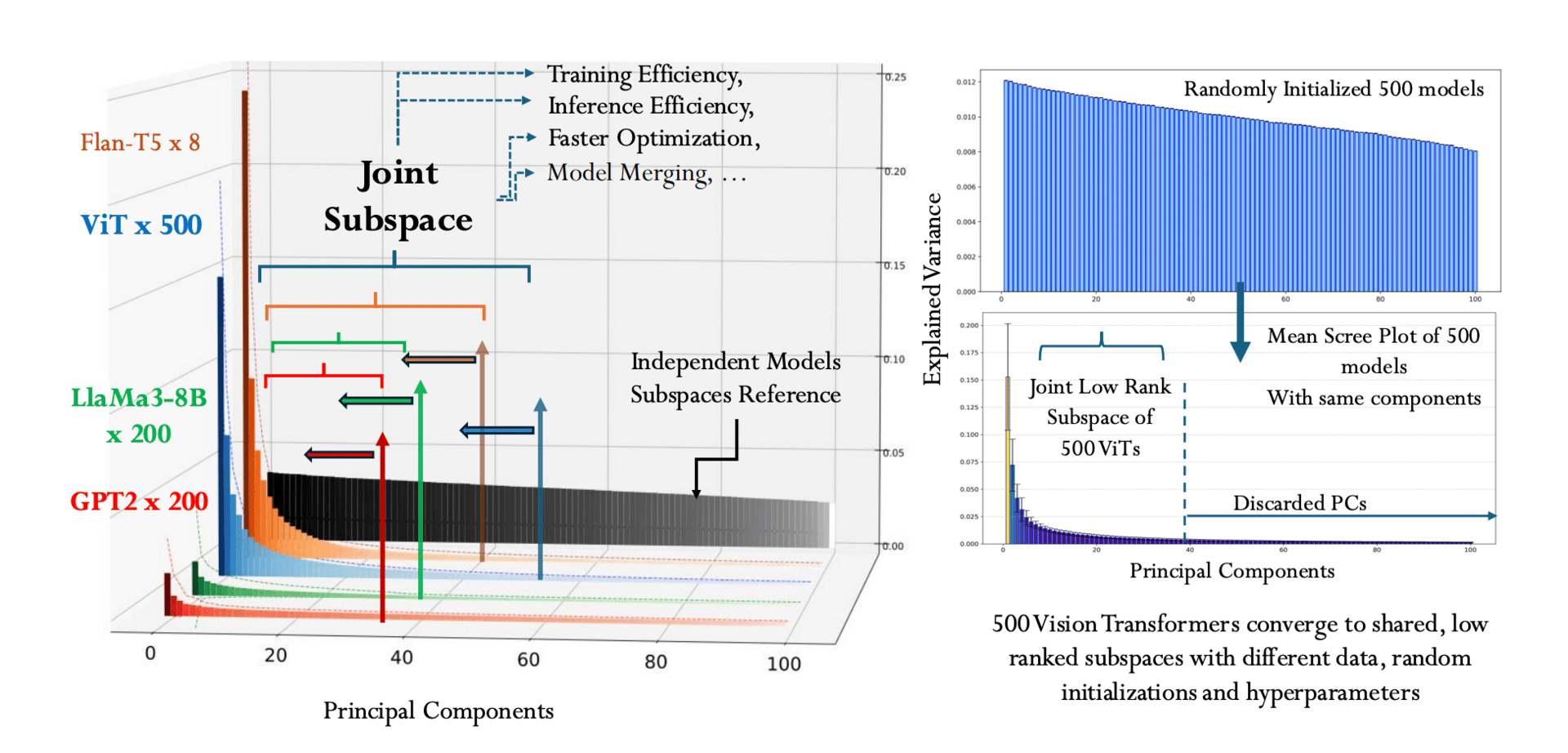
Deep Networks Converge to Shared, Low-Rank (Universal) Subspaces.
The researchers looked at over 1100 models, including 500 Vision Transformers and 500 Mistral-7B LoRA adapters. By applying spectral decomposition to the models’ weights, they found that the vast majority of each model’s important information is captured by just a handful of principal directions. It’s as if, regardless of what a model was trained to do (recognize images, understand text, or generate content) its parameters end up living in a shared, low-dimensional neighborhood defined by its architecture.
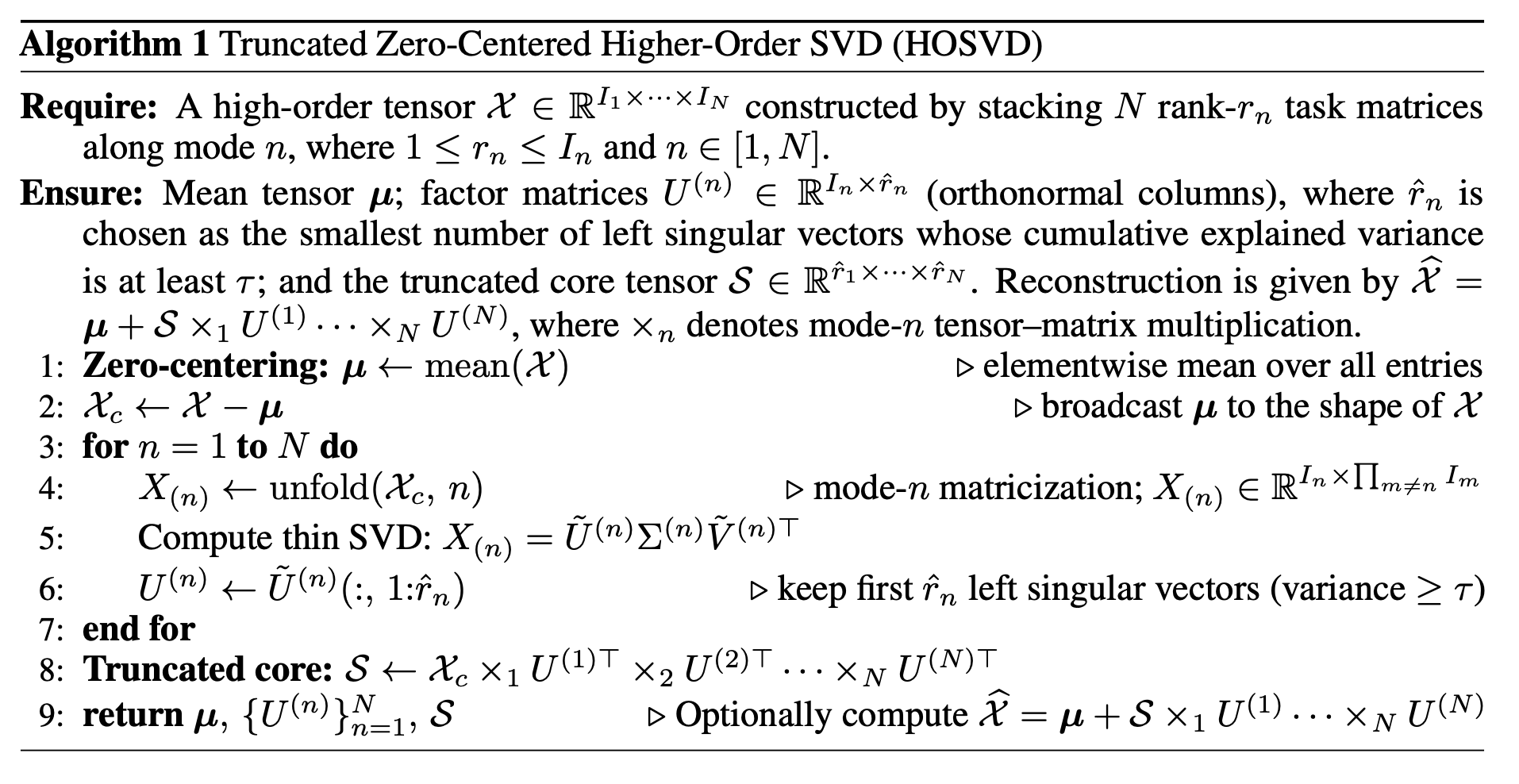
These shared, or “universal,” subspaces have powerful practical implications. They allow for efficient model merging, where hundreds of individual models can be compressed into a single, compact representation, saving massive amounts of memory. In tests, a subspace model built from 500 Vision Transformers maintained strong performance while being about 100 times smaller.
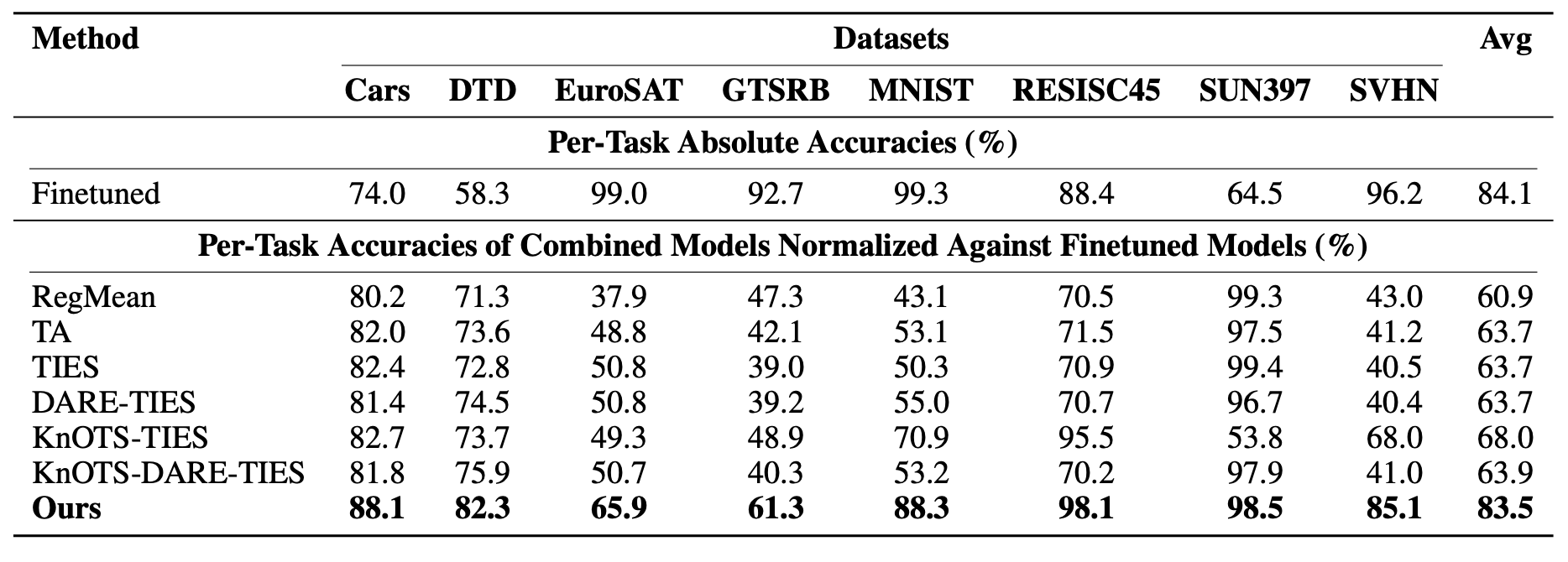
Per-task results for eight ViT-B/32 models, each finetuned with LoRA on a different image classification dataset.
The findings point toward a future where AI development can be more resource-efficient. By leveraging these intrinsic geometric properties, we can build systems that reuse knowledge more effectively, require less storage, and train on new tasks faster. This could significantly reduce the computational and environmental costs of scaling large neural models.