Toward Efficient Agents - Memory, Tool learning, and Planning
Properties
AI models can generate text, but we need “agents” capable of actively interacting with the world to execute complex workflows. However, this autonomy comes with a heavy price. Unlike a standard chatbot that answers a question and moves on, an agent operates in a recursive loop (planning, acting, remembering, and observing).
This creates a compounding accumulation of information, where the output of one step becomes the costly input for the next. This paper aims to solve the problem of “context window saturation” to ensure that AI systems remain sustainable, responsive, and accessible to everyone rather than becoming too computationally expensive to run.
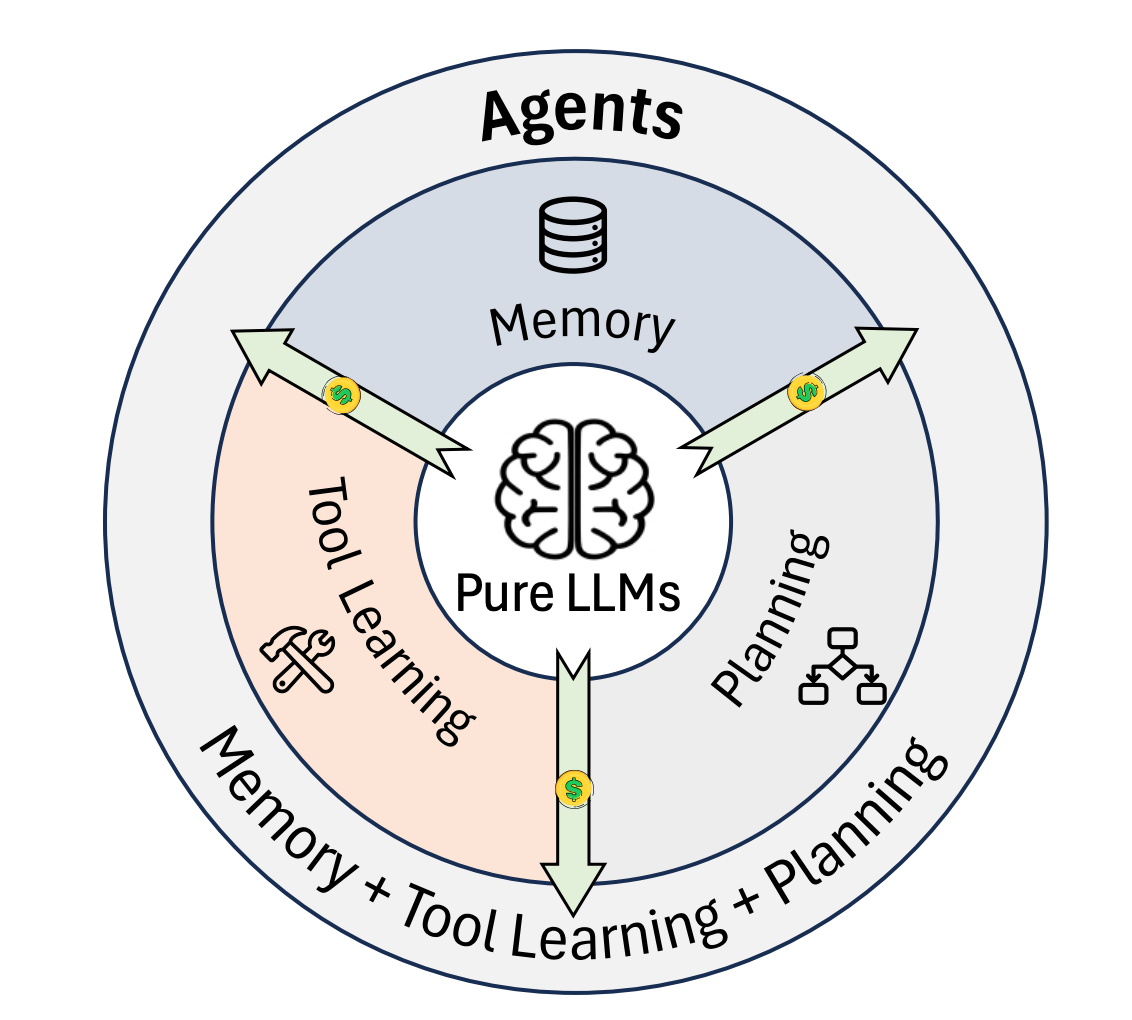
From LLMs to agents: standalone reasoning to trajectory-level reasoning with memory, planning, and tool learning, while introducing additional cost sources.
This survey suggests that creating an “efficient agent” does not simply mean building a smaller model; it requires optimizing the entire system to maximize success while minimizing resource consumption. The researchers found that efficiency gains come from rethinking three specific areas: memory, tool usage, and planning.
In terms of memory, the field is moving away from forcing an agent to re-read every past interaction. Instead, new techniques allow agents to compress history into summaries or “latent” states, essentially giving the AI a working memory that retains the gist of a conversation without the computational weight of the raw text.
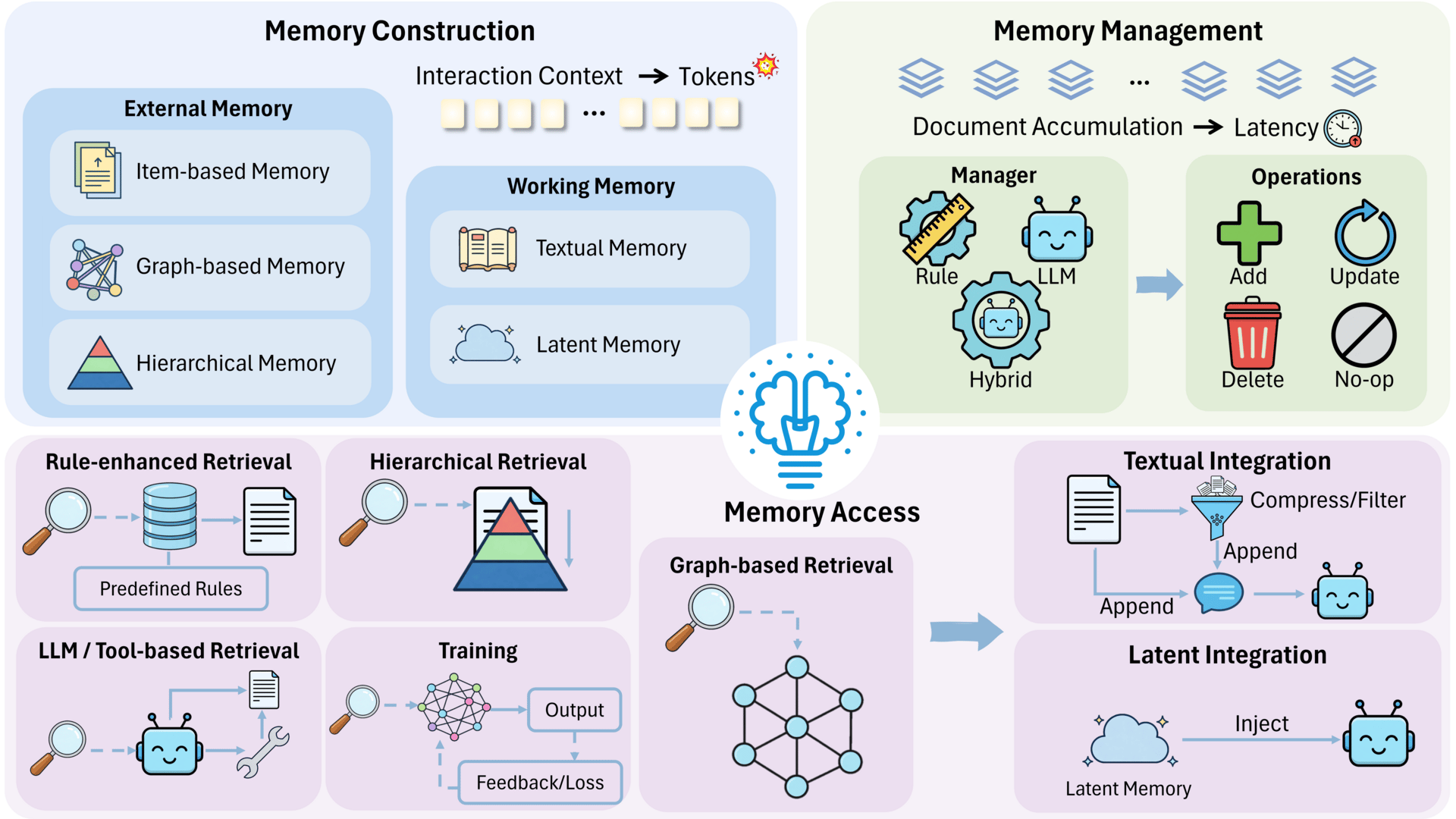
Efficient memory overview.
When it comes to using external tools, we should focus on optimizing how the agent interacts with its environment. Rather than testing tools sequentially or randomly, efficient agents are now using sophisticated retrieval systems to identify the correct tool instantly. Advanced agents can also perform parallel execution, where agents can run multiple tasks simultaneously rather than waiting for one to finish before starting another, drastically reducing the latency between a thought and an action.
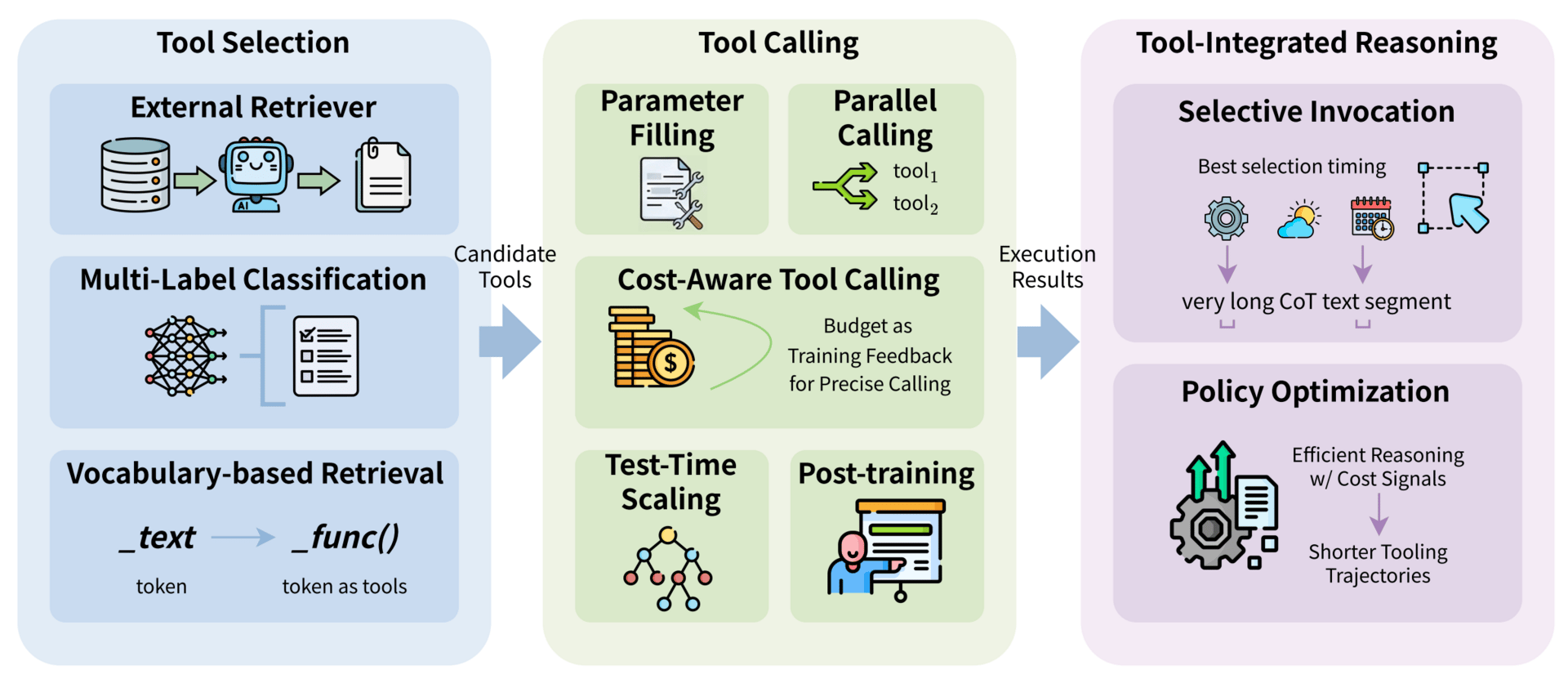
Efficient tool learning comprises three stages
The researchers propose reimagining how agents plan their next moves by treating “thinking” as a limited resource. Instead of allowing for unbounded reasoning, new methods introduce the concept of “budgeted deliberation.”
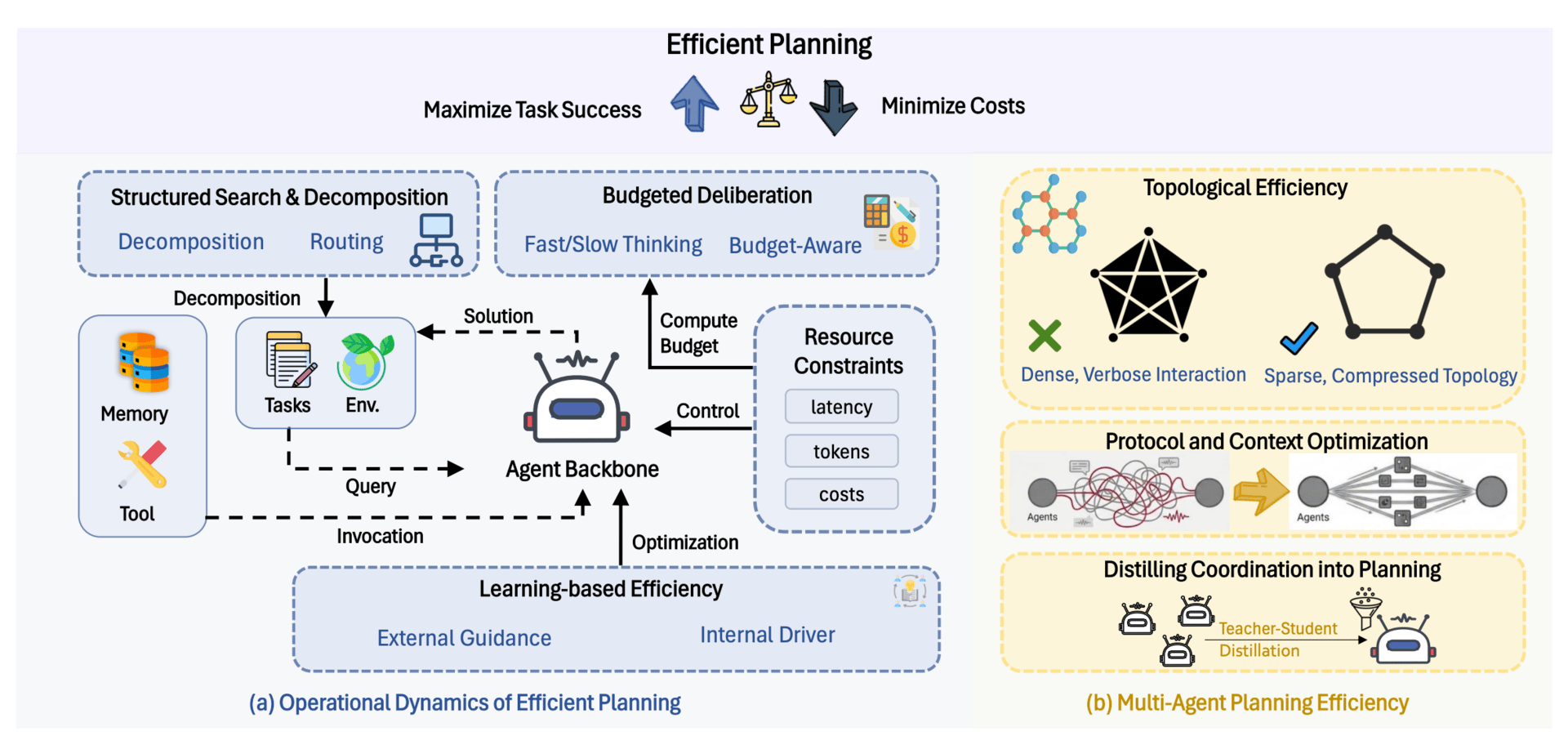
Overview of Efficient Planning.
By using reinforcement learning, systems are being trained to value brevity, effectively rewarding the agent not just for getting the correct answer, but for solving the problem with the fewest possible steps and the least amount of computational effort.
# Related
- MemCollab
- Collaborative memory framework enabling agent-agnostic memory sharing across heterogeneous models via contrastive trajectory distillation