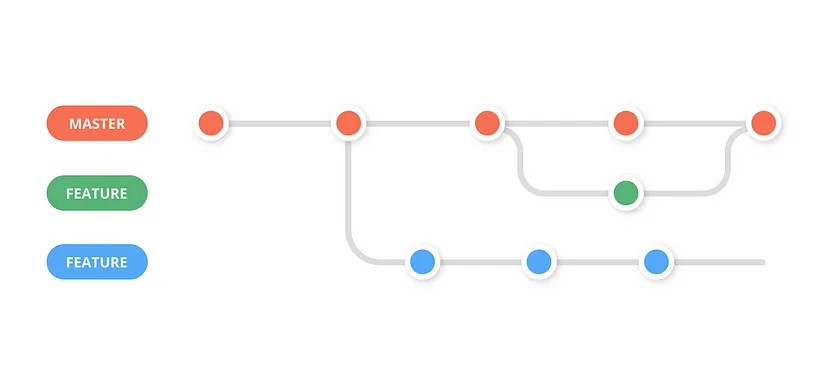
In this workflow, a separate branch is created for each feature being worked on. Developers work on their respective feature branches and only merge them into the main branch when the feature is complete.
Pros:
The main branch contains only finished and stable code.
Features can be developed and maintained independently without affecting the main branch.
Cons:
Managing feature branches becomes challenging when multiple developers work on the same feature.
Longer branch lifespans can lead to complex merging conflicts.
# Trunk-based Development Git Workflow (Develop Branch)
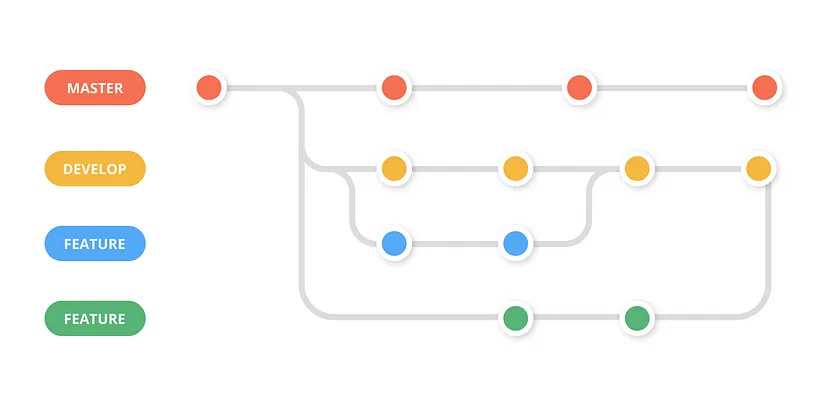
This workflow is similar to feature branching but introduces a trunk (or develop) branch that acts as an intermediary. New features are merged into the trunk branch first, which is then tested before merging to the main branch.
Pros:
All features are tested together before merging into the main branch.
The main branch stays clean and stable.
Minor code changes can be made quickly without breaking the main branch.
Cons:
Adds complexity to repository management with extra merging steps.
Developers need to resolve conflicts locally.
Requires regular updates to keep the main branch current.
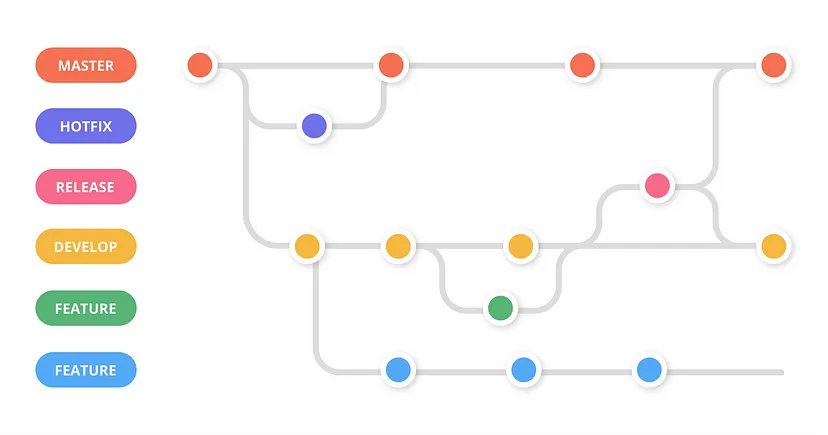
This workflow builds upon the trunk-based workflow by adding two new branches: Release and Hotfix. The release branch is used for testing and bug fixes before a feature is merged into the main branch. The hotfix branch is used for emergency patches directly on the main branch.